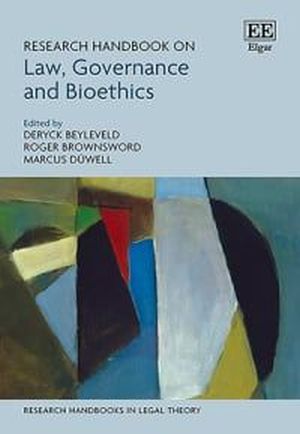
This timely Research Handbook examines the key challenges for the governance of biomedicine and the life sciences. It explores the impact of significant political, technological and ecological developments on international governance and considers ethics in times of global crisis.
Leading experts discuss the ways in which digitalization and AI have disrupted communication and knowledge infrastructure, while highlighting the threats posed by climate change and biodiversity loss to ecological stability. They investigate how the system of governance by law has been challenged by the erosion of public spaces and democratic political systems, while regulatory tools such as ethics committees, participatory structures and self-regulation are unprepared for emerging issues. The Research Handbook demonstrates the importance of developing novel methodological tools to interpret these problems within the field of bioethics. It further proposes a roadmap for future research and practice, outlining how the life sciences can provide new possibilities for human health and well-being.
Scholars and students of law and society, legal philosophy and legal theory will greatly benefit from this illuminating Research Handbook. It is also a useful resource for those studying bioethics, moral philosophy and the social sciences.

Numerous ethical guidelines and regulatory frameworks have been developed to assess and shape digital systems. However, these efforts often rest on the dubious assumption that individuals and organisations possess the necessary capacities to assess such systems in terms of justice, reliability, and other normative standards – especially given the growing complexity and corresponding opacity of many digital models. This issue is therefore of central importance to both legal and ethical debates surrounding AI and digital systems in general. The contributors to this volume propose a new approach to digital governance to enhance the capacity to evaluate and shape digital systems.
Link to Publisher & Open Access Version
Festschrift for Klaus Steigleder
Rights-based ethics offer a conceptual framework to address the complex ethical issues of our time. This volume combines systematic and historical perspectives on rights-based ethics with discussions of a broad range of topics in applied ethics to assess the achievements and limits of rights-based approaches.
The normative concepts of fundamental human rights and human dignity play an essential role in considerations about global justice and international politics. However, these concepts have not been taken up sufficiently in the standard approaches to normative ethics. This volume contends that rights-based approaches in ethics not only offer a theoretical framework to explain complex normative concepts, but they can also offer answers to some of today’s most complex moral questions. First, the book addresses the conceptual and foundational questions of rights-based ethics. Second, it offers historical and cultural perspectives on rights. Third, it explores how rights-based ethics can address applied issues related to climate change, health systems, global supply chains, and the finance industry.
Der stetige Ausbau neuer Informations- und Kommunikationstechnologien erhöht den gesellschaftsweiten »Datenhunger« – man denke nur an Trainingsdaten für KI-Anwendungen. Die Frage danach, wer den Zugang zu Daten erlaubt und welche Regeln insoweit zu beachten sind, ist deshalb von essentieller sozialer Bedeutung. Sind Daten überhaupt ein rechtlich geschütztes Gut, und wenn ja, wessen? Welche Konsequenzen hat das für Zugangsvorgaben? Herkömmlicherweise werden Datenzugangsregeln meist mit individueller Kontrollkompetenz, nur in Teilbereichen auch mit übergeordneten Interessen begründet. Angesichts drohender Überforderung und hieraus resultierender Datenunterversorgung untersuchen die Beiträge dieses Bandes aus unterschiedlichen Perspektiven, ob ein solches, stark subjektbezogenes Regelungsmodell theoretisch überzeugend ist und welche praxisgerechten Alternativlösungen denkbar sind.

Deryck Beyleveld and Marcus Düwell. 2020. The Sole Fact of Pure Reason. Kant’s Quasi-Ontological Argument for the Categorical Imperative. Supplements to the Kant-Studien. Berlin: De Gruyter.
This book presents a comprehensive analysis of Kant’s justification of the categorical imperative. The book contests the standard interpretation of Kant’s views by arguing that he never abandoned his view about this as expressed in his Groundwork. It is distinctive in the way in which it places Kant’s argument in the context of his transcendental philosophy as a whole, which is essential to understand it as an argument from within human agential self-understanding. The book reviews that existing literature, then presents a logical construction of Kant’s argument, which it defends by examining what Kant has to say about synthetic a priori practical propositions in the context of his transcendental philosophy as a whole, and by a detailed examination of how he presents his argument in the Second Critique and the Groundwork. The concluding chapter provides a statement about the validity of Kant’s argument.
Link to publisher.
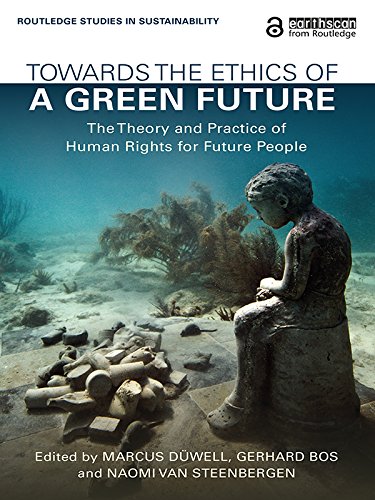
Marcus Düwell, Gerhard Bos and Naomi van (Eds.). 2018. Towards the Ethics of a Green Future. The Theory and Practice of Human Rights for Future People. Abingdon, Oxon/New York: Routledge.
What are our obligations towards future generations who stand to be harmed by the impact of today’s environmental crises? This book explores ecological sustainability as a human rights issue and examines what our long-term responsibilities might be.
This interdisciplinary collection of chapters provides a basis for understanding the debates on the provision of sustainability for future generations from a diverse set of theoretical standpoints. Covering a broad range of perspectives such as risk and uncertainty, legal implementation, representation, motivation and economics, Towards the Ethics of a Green Future sets out the key questions involved in this complex ethical issue.
Link to publisher; Open Access.
Gerhard Bos and Marcus Düwell (Eds.). 2017. Human Rights and Sustainability. Moral responsibilities for the future. Oxford: Routledge.
The history of human rights suggests that individuals should be empowered in their natural, political, political, social and economic vulnerabilities. States within the international arena hold each other responsible for doing just that and support or interfere where necessary. States are to protect these essential human vulnerabilities, even when this is not a matter of self-interest.
This book develops the idea of environmental obligations as long-term responsibilities in the context of human rights. It proposes that human rights require recognition that, in the face of unsustainable conduct, future human persons are exposed and vulnerable. It explores the obstacles for long-term responsibilities that human rights law provides at the level of international and national law and challenges the question of whether lifestyle restrictions are enforceable in view of liberties and levels of wellbeing typically seen as protected by human rights.
Link to publisher.
Marcus Düwell, Jens Braarvig, Roger Brownsword and Dietmar Mieth (Eds.). 2014. Cambridge Handbook on Human Dignity. Cambridge: Cambridge University Press.
This introduction to human dignity explores the history of the notion from antiquity to the nineteenth century, and the way in which dignity is conceptualised in non-Western contexts. Building on this, it addresses a range of systematic conceptualisations, considers the theoretical and legal conditions for human dignity as a useful notion and analyses a number of philosophical and conceptual approaches to dignity. Finally, the book introduces current debates, paying particular attention to the legal implementation, human rights, justice and conflicts, medicine and bioethics, and provides an explicit systematic framework for discussing human dignity. Adopting a wide range of perspectives and taking into account numerous cultures and contexts, this handbook is a valuable resource for students, scholars and professionals working in philosophy, law, history and theology.
Link to publisher.

Paul Sollie and Marcus Düwell (Eds.). 2009. Evaluating New Technologies. Methodological Problems for the Ethical Assessment of Technological Developments. Dordrecht: Springer.
Many of the developments in modern technology are complex, risky, and, to begin with, cloaked in uncertainty. How should we deal with such developments – that may not only have positive effects (such as an increase of our well-being or an improved ability to control and cure diseases) but also negative effects for human beings and the environment (such as global warming or the medicalisation of human beings)?
This book addresses methodological issues with regard to the ethical evaluation of new and emerging technology. It focuses specifically on the concept of uncertainty that, unlike the notion of risk, is greatly undervalued in the field of ethics.
Link to publisher.

Marcus Düwell. 2008. Bioethik. Methoden, Theorien und Bereiche. Stuttgart: Metzler. English: (2011), Bioethics. Theories, Methods, Scope. Oxford: Routledge. Chinese Translation: (2018).
Heiß umstritten: Stammzell- und Embryonenforschung, Gentechnologie, Euthanasie. Was ist ethisch vertretbar? Marcus Düwell stellt die Diskussionen um die Grenzen menschlichen Handelns, um Leben und Natur und um den wissenschaftlichen Fortschritt auf ein philosophisches Fundament. Er erläutert Geschichte, Methoden und Begriffe der Bioethik und geht der Frage nach: Wie ist die veränderte Welt moralphilosophisch zu bewerten? Das Grundlagenwerk hilft bei der Orientierung.
Link to publisher.
Link to English edition.
Marcus Düwell, Christoph Rehmann-Sutter and Dietmar Mieth (Eds.). 2008. The Contingent Nature of Life. Bioethics and the Limits of Human Existence. Dordrecht: Springer.
Life and nature are imperfect, uncontrollable, and largely unknowable, that is to say: contingent. The contingency of life is a significant challenge for medicine and technology. Life sciences seem to broaden the possibilities of control to an extent that the contingency of life and nature is no longer self-evident. This raises a lot of questions. Are the life sciences defying the contingency of our existence? Or are we simply manipulated by utopian promises? And if contingency is being challenged, why should we worry about it? Is contingency essential for a meaningful life and way of life? This volume explores the different ways in which the contingency of life, and especially human life, is relevant for ethical discussions and the normative frameworks of bioethics. The authors discuss the notion of contingency from a philosophical perspective, paying special attention to the impact of life sciences on people with disabilities and to intercultural perspectives on bioethical debates.
Link to publisher.
Christoph Rehmann-Sutter, Marcus Düwell, M. and Dietmar Mieth (Eds.). 2006. Bioethics in Cultural Contexts. Interdisciplinary Approaches. Dordrecht et al.: Kluwer Academic Press.
Bioethics, if it is to have adequate discriminatory power, should include sensitivity to the cultural contexts of biomedicine, and also to the cultural contexts of bioethics itself. Biomedical developments carry with them social and cultural meanings that must be taken into account if the accompanying bioethical dilemmas are to be understood.
This book discusses a range of methodological issues for an interdisciplinary bioethics. How can bioethics be an enterprise that does not only isolate issues and moral reasons but also (re)contextualises them? What are the strengths and weaknesses of different traditional and innovative modes of ethical work in terms of these tasks?
Link to publisher.
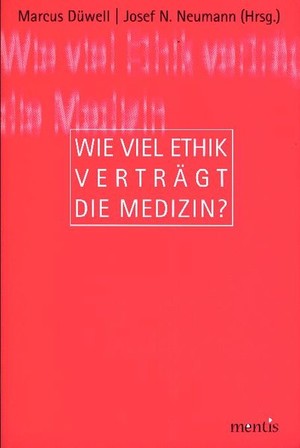
Marcus Düwell and Josef J. Neumann (Eds.). 2005. Wieviel Ethik verträgt die Medizin? Paderborn: Mentis.
Es ist weitgehend undeutlich, was man von Medizin- bzw. Bioethik erwarten kann. Kann Medizinethik als wissenschaftliche Disziplin auftreten? Gibt es im Bereich der Ethik überhaupt etwas zu erkennen, was erforscht werden könnte? Welche wissenschaftlichen Standards sind dann relevant? Mit welcher Autorität wird in Fragen der Medizinethik in Kliniken beraten? Mit welcher Autorität sprechen Ethikräte und Ethikkommissionen ihre Empfehlungen an Parlamente und Regierungen aus? Mit der Autorität der Wissenschaft, die sich dem zwanglosen Zwang des besseren Arguments verpflichtet weiss? Oder sind es Gremien, die schwierige biopolitische Entscheidungen abfedern sollen?
Link to publisher.
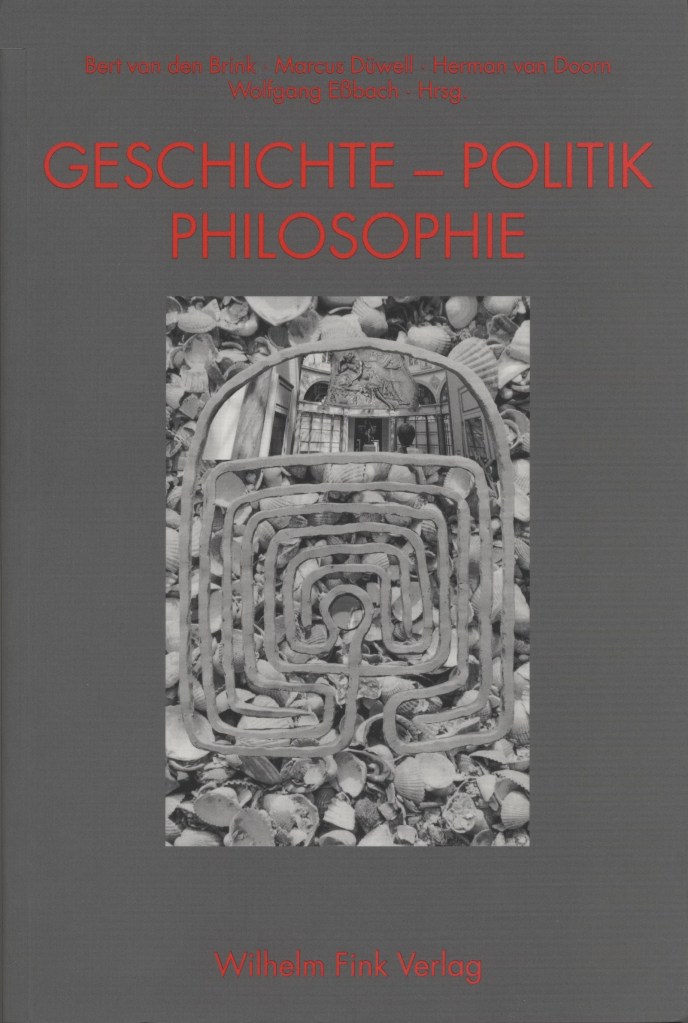
Bert van den Brink, Marcus Düwell, Wolfang Eßbach and Hermann van Doorn (Eds.). 2003. Geschichte – Politik – Philosophie, Festschrift für Willem van Reijen zum 65. Geburtstag. München: Wilhelm-Fink-Verlag.
“Die Frage nach Versöhnung, Glück und Heil ist die Folie, vor der sich in der Philosophie, von Anfang an, die Frage nach der Wahrheit artikuliert.“ (Willem van Reijen) – Mit diesen drei zentralen Themen wird ein Spektrum wissenschaftlicher Bemühungen umrissen, das in ganz unterschiedlichen Kontexten im Hinblick auf Fragen der praktischen und der philosophischen Philosophie und ihrem Verhältnis zu der Idee der Geschichte verfolgt wird.
Link to publisher.
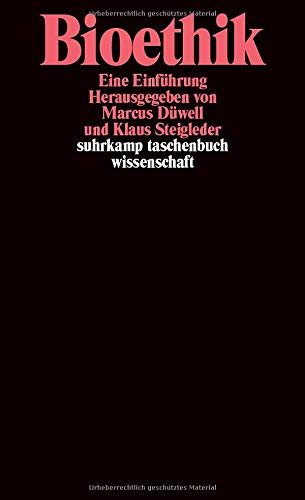
Marcus Düwell and Klaus Steigleder (Eds.). 2003. Bioethik – Eine Einführung. Frankfurt/M.: Suhrkamp.
»Bioethik« ist für viele fast ein Synonym für die wachsende wissenschaftliche wie öffentliche Beschäftigung mit Fragen konkreter Ethik. Der Band beleuchtet unterschiedliche Aufgabenbeschreibungen, Theorien und Methoden der Bioethik. Zudem werden zentrale Diskussionsfelder von der Pränataldiagnostik über das Klonen bis hin zu Sterbehilfe und Hirntod behandelt. Neben medizinethischen Fragestellungen finden auch Problembereiche wie etwa die grüne Gentechnik, die Patentierung gentechnischer Veränderungen und die Tierethik Berücksichtigung.
Link to publisher.
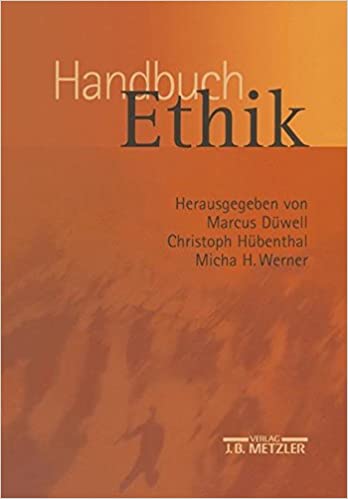
Marcus Düwell, Christoph Hübenthal and Micha Werner (Eds.). 2002. Handbuch Ethik. Stuttgart: Metzler. 2nd revised edition 2006, 3rd edition 2011.
Ethische Fragestellungen in vielfältigen Kontexten. Das Handbuch erläutert die verschiedenen ethischen Theorien und bietet Einblicke in Themen der Angewandten Ethik sowie in aktuelle Debatten. Rund 50 Grundbegriffe der Ethik werden ausführlich erklärt darunter: Freiheit, Risiko, Verantwortung, Wille u. v. a.
Link to publisher.
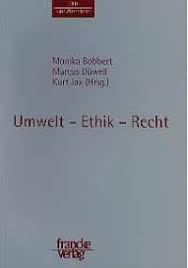
Monika Bobbert, Marcus Düwell and Kurt Jax (Eds.). 2002). Umwelt, Ethik, Recht. Tübingen: Francke.
Ethik und Recht haben sich traditionell fast ausschließlich mit den Beziehungen von Menschen untereinander beschäftigt. Der Schutz der natürlichen Umwelt stellt eine neue und bedeutende Herausforderung dar. Es ist daher wichtig, die Beziehungen zwischen Ethik, Umwelt und Recht genauer zu untersuchen. Die Beiträge des Buches sind von Fachleuten aus Rechtswissenschaft, Biologie, Philosophie, Theologie und Politik verfasst, die sich moralischer und juridischer Fragen des Umwelt- und Naturschutzes annehmen. Neben grundsätzlichen Überlegungen zum Verhältnis von Ethik und Recht werden die ethische Dimension von “Nachhaltigkeit” und “Biodiversität”, die Verankerung des Umweltschutzes im Grundgesetz und die Aufnahme des Begriffs “Würde der Kreatur” in die Schweizer Bundesverfassung diskutiert.
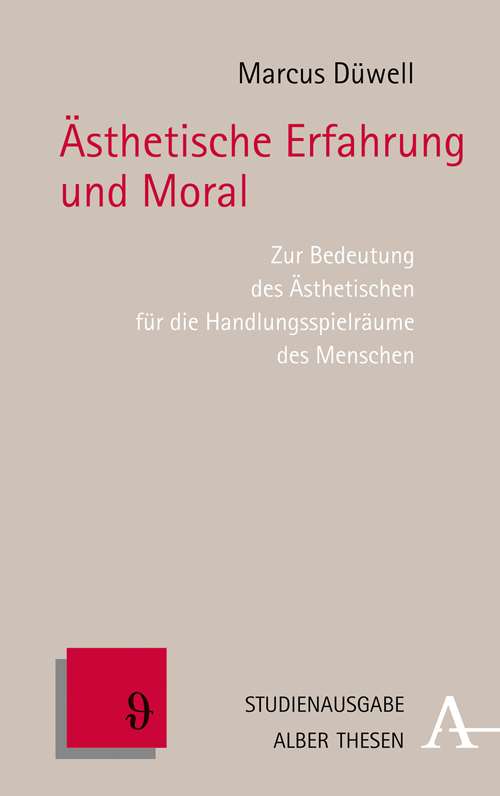
Marcus Düwell. 1999. Ästhetische Erfahrung und Moral. Zur Relevanz des Ästhetischen für die Handlungsspielräume des Menschen. Freiburg i. Br. and München. 2nd edition 2000.
Bedarf die Moral der spielerischen Kraft ästhetischer Erfahrung? Ist das Ästhetische für die menschliche Lebensgestaltung und Moral von Bedeutung? Marcus Düwell untersucht zunächst die Eigenlogik beider Bereiche. Jenseits einer moralischen Funktionalisierung des Ästhetischen und einer Ästhetisierung der Moral zeigt sich die moralische Bedeutung ästhetischer Erfahrung: Sie leistet eine Erweiterung und Erschließung von Handlungsräumen. Somit zeigt sich diese Bedeutung gerade in den Distanzierungsmöglichkeiten ästhetischer Erfahrung gegenüber Verbindlichkeiten der Lebensführung.
Link to publisher.
 Marcus Düwell